Borgio and Verezzi
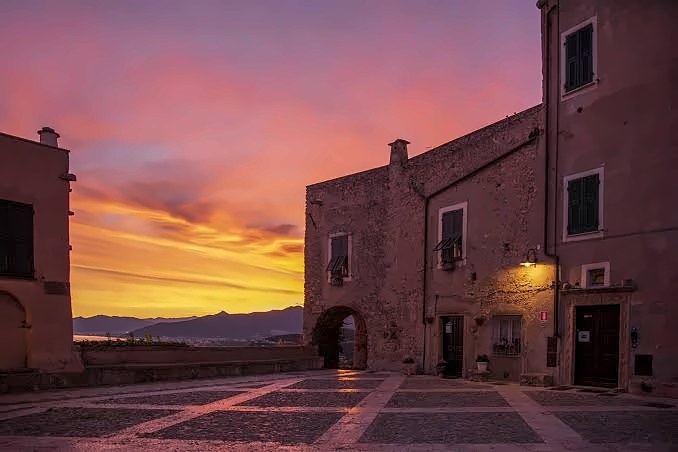
Borgio is the part near the sea, gathered around the church of San Pietro, a neoclassical building begun in 1789 and completed in 1806, with two bell towers. Verezzi is the village on the hill, made of stone houses and cobbled lanes and divided into four hamlets: Poggio, Piazza, Roccaro and Crosa. Verezzi is one of the Borghi più belli d'Italia, the association of Italy's most beautiful villages.
The Borgio Verezzi Caves
Discovered in 1933, they are considered among the most colourful caves in Italy: minerals tint the stalactites and stalagmites white, yellow and red, and small lakes reflect the formations like mirrors. Remains of animals that lived hundreds of thousands of years ago have been found inside.
Visits are guided, last about an hour and follow a route of about 800 metres. Inside it is about 16 °C, so bring a sweater even in August. Times and bookings are on the official website, grottediborgio.it.
The Theatre Festival
Every summer since 1967, Piazza Sant'Agostino in Verezzi has become an open-air theatre overlooking the gulf. The Borgio Verezzi Theatre Festival stages plays on July and August evenings.
Hamlets and the windmill
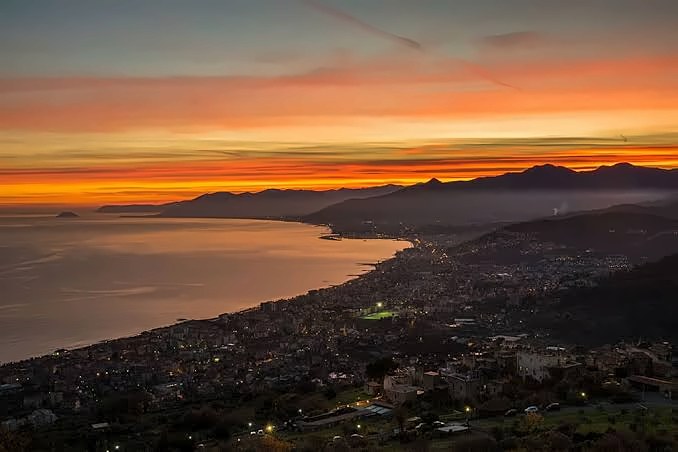
In the hamlet of Crosa stands an old windmill, known as the Phoenician mill, rare of its kind. Walking between the hamlets, Verezzi stone gives the walls their pinkish tones, and the viewpoints look over the whole coast.
The sea
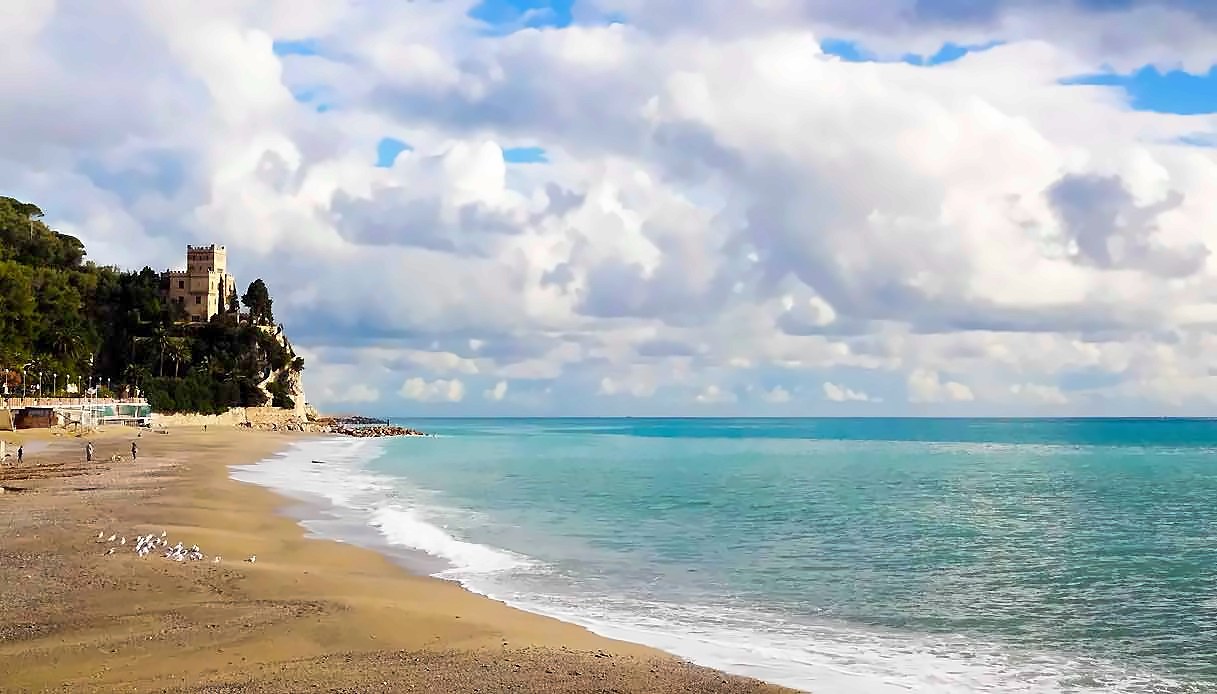
Borgio Verezzi's beaches are sand and pebbles, with beach clubs and free beaches. In 2026 Ex Sati, Rio Batorezza and Rio Bottasano received the Blue Flag. For the beaches of Finale Ligure and Varigotti, read our beach guide.
Getting there
Borgio Verezzi has a station on the Genoa–Ventimiglia railway. By car, take the A10 motorway, exits Finale Ligure or Pietra Ligure. Finale Ligure is a few minutes away.